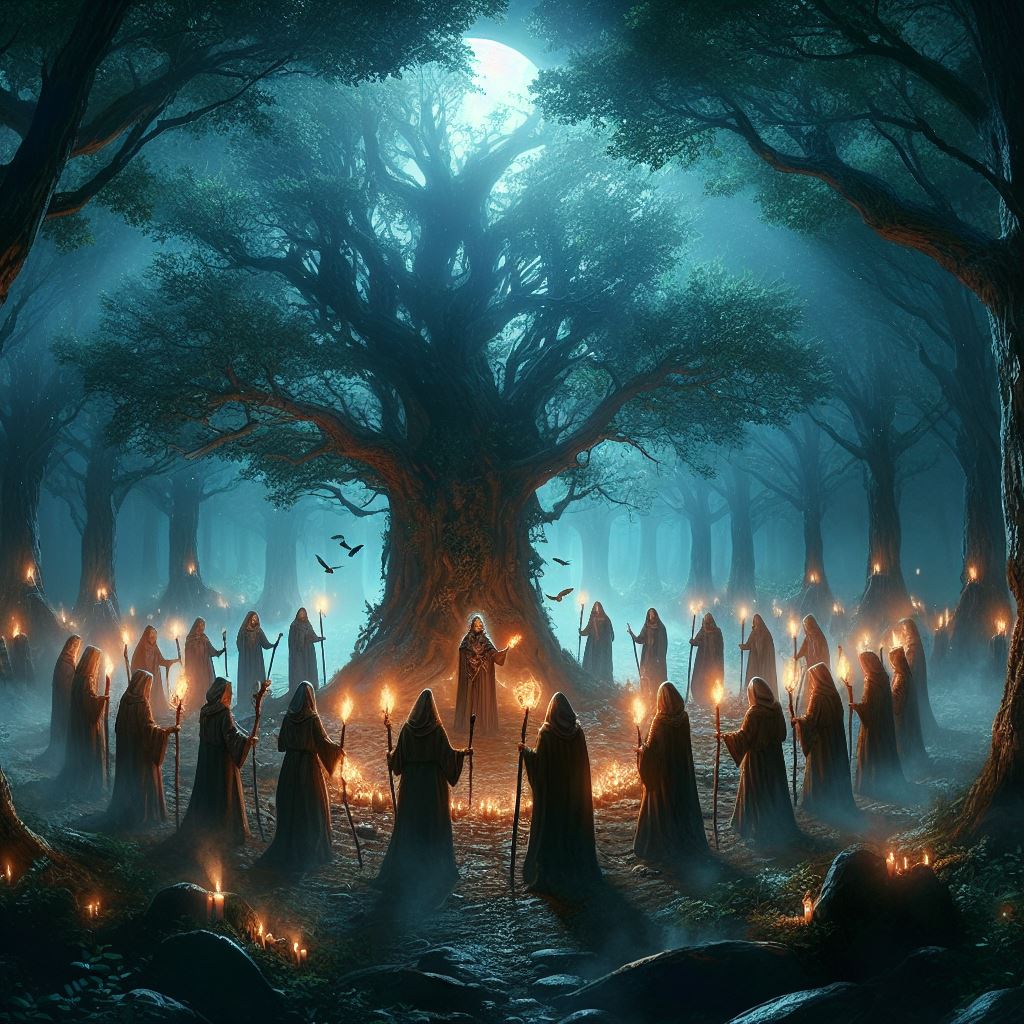
On March 20th, a hush falls over the natural world. Not a hush of dormancy, but one of pregnant anticipation. The Earth reaches a turning point, the spring equinox. Day and night achieve a perfect equilibrium, their lengths exactly the same across the globe (except for the poles), before daylight stretches its dominion over the coming months. This celestial event has captivated humanity for millennia, inspiring countless traditions and rituals that celebrate rebirth, renewal, and the triumph of light over darkness.
For many, the spring equinox is a purely astronomical phenomenon, a fascinating quirk of our planet’s tilt. But for others, it’s a potent symbol, a wellspring of spiritual and cultural significance. This is especially true for Druids, Wiccans, and a growing number of nature enthusiasts who view the equinox as a time to reconnect with the Earth’s rhythms and harness the potent energies of the changing seasons.
From ancient celts to modern pagans
Our reverence for the spring equinox stretches back into the mists of prehistory. Evidence suggests that megalithic structures like Stonehenge in England were meticulously aligned with the equinoxes and solstices, hinting at a sophisticated understanding of astronomy and a deep connection with the celestial cycles. The ancient Celts celebrated the spring equinox as Alban Eilir, the “Light of the Earth,” a festival marking the return of warmth and the burgeoning of life. Offerings were made to ensure bountiful harvests, and communities gathered to kindle bonfires, symbolizing the sun’s renewed vigor.
These traditions found echoes in countless cultures around the world. The Egyptians observed the spring equinox as a time to celebrate the triumph of the sun god Ra over darkness. In China, the Qingming Festival honors deceased ancestors, coinciding with the belief that the veil between the spirit world and the physical world thins during this period of balance. Even today, remnants of these ancient traditions persist. Easter, with its themes of new life and resurrection, has its roots in pre-Christian spring festivals that celebrated the Earth’s awakening.
The rise of modern Paganism, particularly Wicca, has seen a renewed interest in the equinoxes and solstices. Wiccans celebrate the spring equinox as Ostara, a festival honoring the fertility goddess and the burgeoning life force within nature. Rituals often involve decorating altars with spring flowers, lighting candles to represent the increasing daylight, and casting spells for growth and abundance.
The enduring power of the spring equinox
The allure of the spring equinox transcends specific religious or spiritual beliefs. It’s a potent reminder of nature’s cyclical nature, a moment of perfect balance before the pendulum swings towards longer days and warmer weather. Psychologically, the equinox can serve as a powerful reset button. As the natural world bursts forth with renewed life, it can inspire us to shed the lethargy of winter and embrace new beginnings in our own lives.
Studies by the National Institute of Mental Health in the US have shown a seasonal variation in mood disorders, with depression rates increasing during the winter months. The arrival of spring, with its promise of sunlight and warmth, can have a profound impact on our well-being, lifting our spirits and motivating us to be more active.
Modern rituals for a modern world
For those curious to tap into the power of the spring equinox, there are numerous ways to participate, regardless of religious beliefs. Here are a few suggestions:
- Embrace nature: Take a walk in a park or forest, immersing yourself in the sights, sounds, and smells of the awakening natural world.
- Practice gratitude: Reflect on the things you’re grateful for in your life, and set intentions for the coming months. Write them down in a journal or create a vision board as a visual reminder.
- Spring cleaning for the soul: Just as we cleanse our homes in spring, consider engaging in activities that clear negativity and promote mental clarity. This could involve meditation, journaling, or decluttering your living space.
- Plant a seed (literally or figuratively): Plant a seed in your garden, symbolizing new beginnings and growth. You can also plant a seed metaphorically by starting a new project, learning a new skill, or embarking on a personal journey.
- Gather with loved ones: Share a meal with friends and family, celebrating the joy of connection and the return of warmer weather.
The spring equinox is a powerful reminder that we are part of a larger cycle, inextricably linked to the rhythms of the Earth. By acknowledging and celebrating this connection, we can tap into a wellspring of renewal and inspiration, allowing ourselves to blossom alongside the natural world. So, step outside on March 20th, feel the sun on your skin, and embrace the magic of the day when day meets night, and a new season dawns.
From ancient sites to virtual gatherings
The resurgence of interest in the equinoxes and solstices has led to a fascinating phenomenon: the merging of ancient traditions with modern practices. Technology has played a significant role in this evolution. Social media platforms like Instagram and Facebook are filled with vibrant photos and videos of people celebrating the spring equinox at iconic locations like Stonehenge or atop Machu Picchu. These virtual pilgrimages, while geographically distant from the original sites, allow individuals to connect with the collective energy of the day and share their experiences with a global audience.
However, the rise of virtual celebrations has also sparked debates about cultural appropriation and the importance of respecting the sacredness of certain sites. Many argue that experiencing the equinox at a place like Stonehenge is a deeply personal and spiritual experience, best undertaken with respect for the history and traditions associated with the location.
The call for environmental awareness
The spring equinox also serves as a stark reminder of the environmental challenges facing our planet. As climate change disrupts seasonal patterns and threatens biodiversity, there’s a growing movement to use the equinox as a platform for environmental activism. Organizations like Earth Day Network encourage individuals to plant trees, participate in clean-up drives, or advocate for sustainable practices. The inherent message of renewal associated with the equinox becomes a powerful call to action, urging us to protect and nurture the Earth for future generations.
A beacon of hope and possibility
Ultimately, the power of the spring equinox lies in its ability to resonate with a fundamental human need – the desire for hope and new beginnings. Whether observed through ancient rituals, modern practices, or simply a moment of quiet reflection, the equinox offers a chance to reset, recharge, and step into the future with renewed purpose. As the days lengthen and the Earth awakens from its winter slumber, the spring equinox serves as a potent symbol of our own capacity for growth, transformation, and the potential for a brighter tomorrow.
Photo credit: René Cortin – Flickr – Wikimedia Commons